Research
We are interested in how gene regulatory systems robustly pattern animal embryos. We are also interested in how these systems have been shaped by evolution and how they influence evolution in return.
Our research combines advanced microscopy, genetic experiments, and computational modelling. Some of our current projects are listed below.
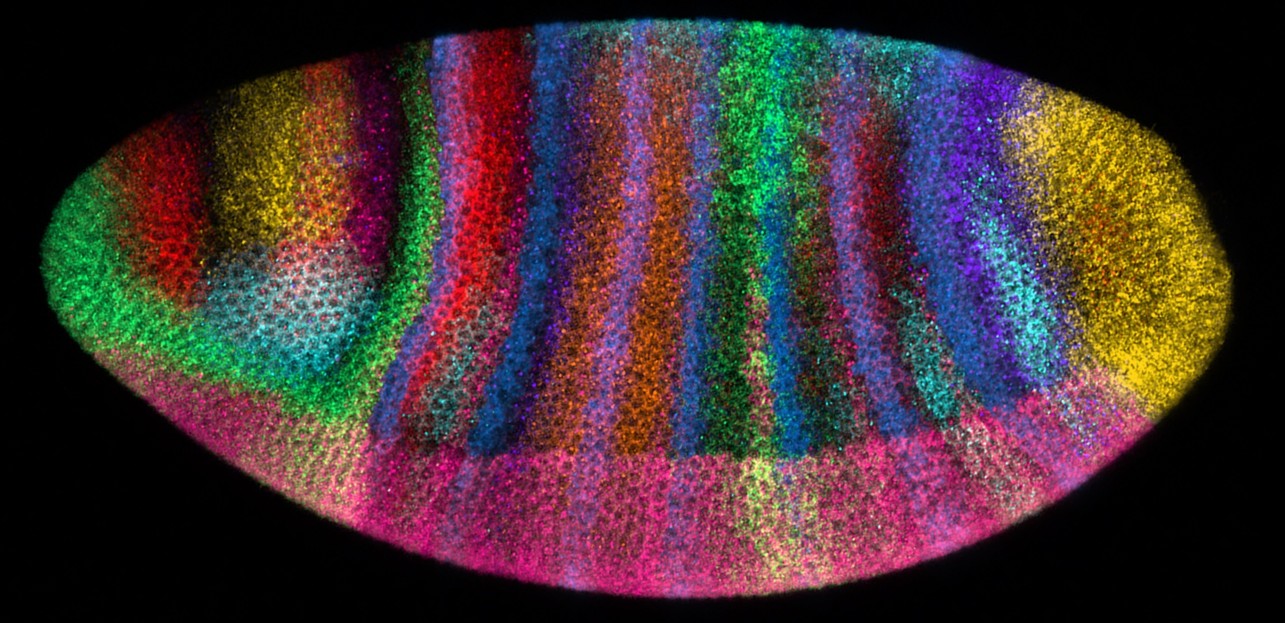
Gap gene pattern scaling in Drosophila
The gap genes regionalise and proportion the early embryo, downstream of maternal gradients. We are interested in the robust scaling behaviour of the gap gene pattern, which is hard to explain as a local response to maternal inputs. Instead, we hypothesise that scaling is an embryo-level response which relies on the diffusion and cross-regulation of zygotic gene products. To understand the mechanistic basis of this response, we are using multiplexed confocal microscopy and computational image analysis to quantify zygotic gene expression patterns in mutant and size-perturbed embryos. In collaboration with Tom Hiscock’s group, we are also modelling the dynamics of the patterning system within a Reaction-Diffusion framework.
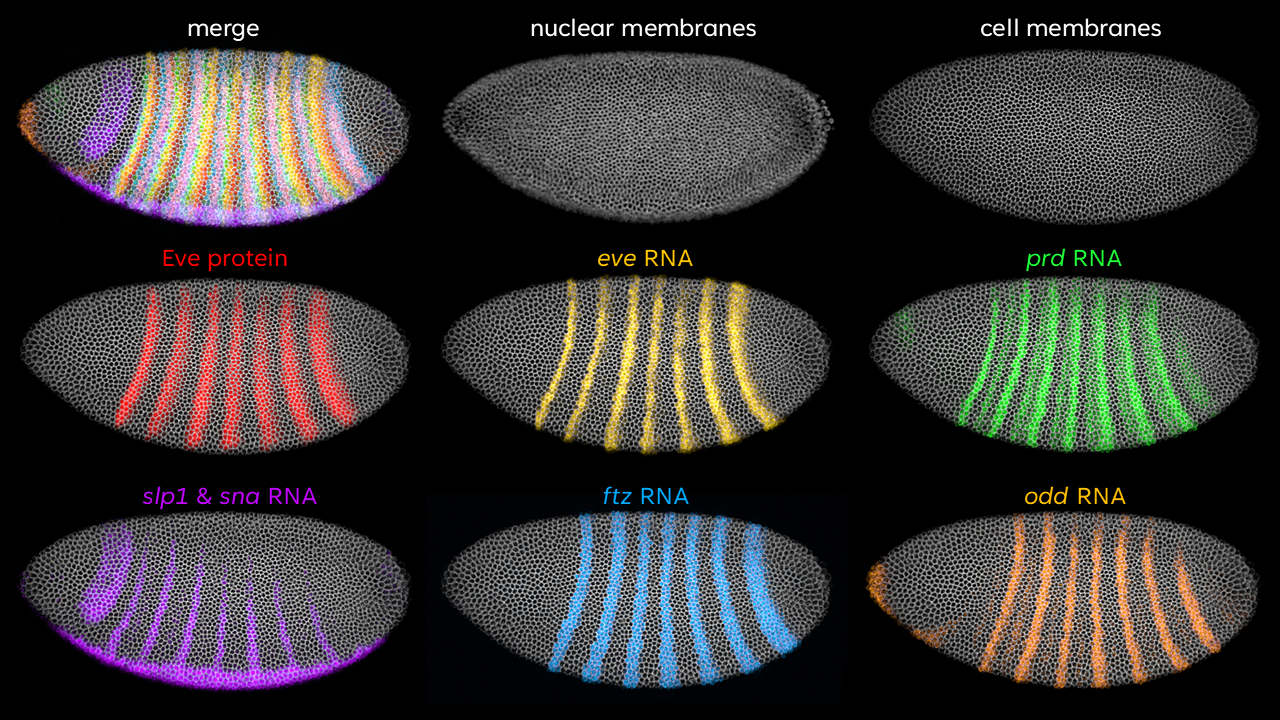
Pair-rule gene regulation in Drosophila
Segments in Drosophila and other arthropods are patterned by the pair-rule genes, which are expressed in series of precisely phased stripes. We are interested in understanding how these stripes are regulated: how individual genes respond to the levels and combinations of their transcriptional inputs; how enhancers function singly and in combination; and how networks of cross-regulating genes dynamically refine output patterns. We are investigating these questions using high-res multiplexed fixed imaging, MS2/PP7 and LlamaTag-based live imaging, computational image and data analysis pipelines, transgenic reporter genes and genetic perturbations.
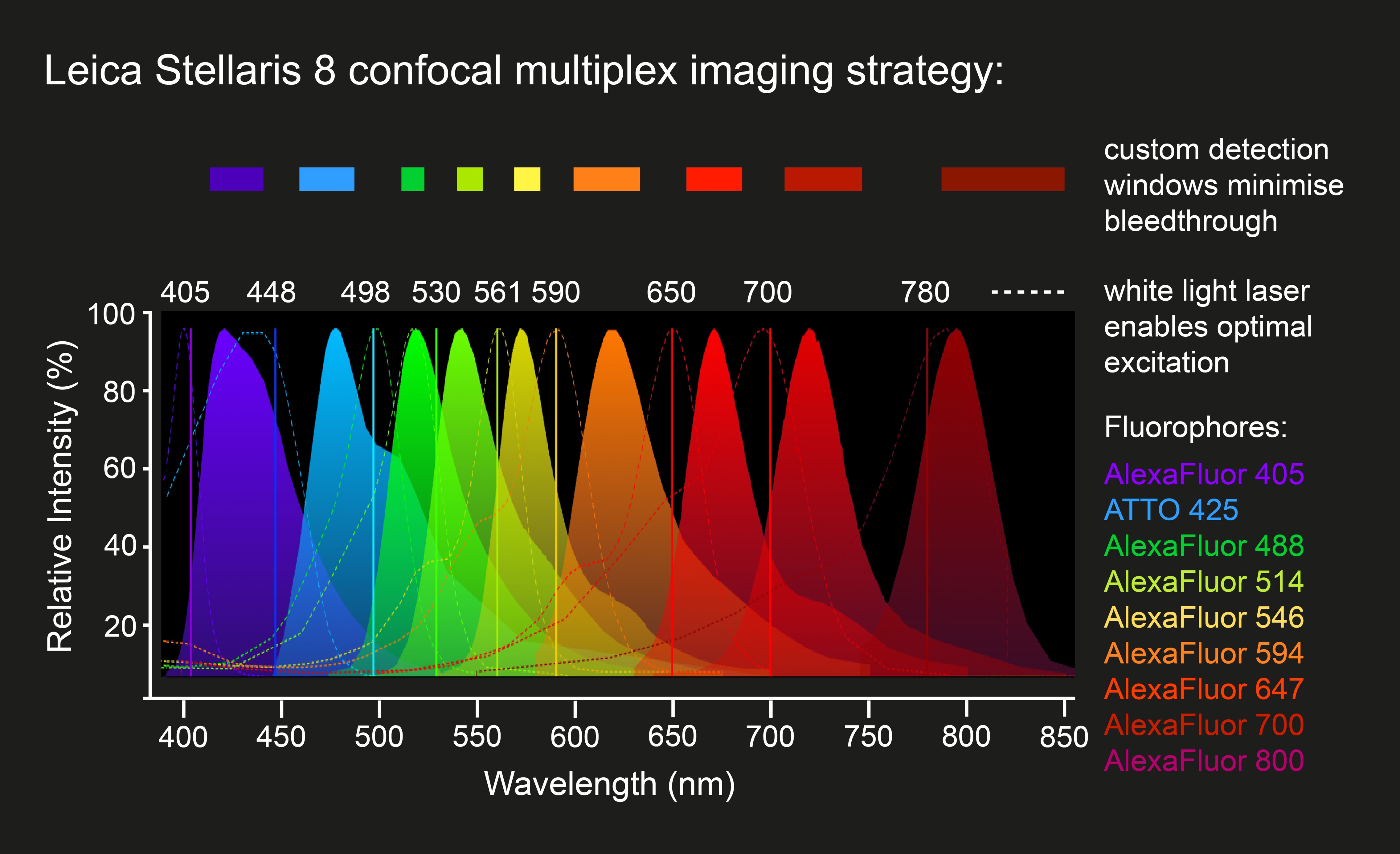
Imaging methods development
Image-based approaches in developmental biology have traditionally been limited by the difficulty of visualising more than 2-3 gene products at once. Using a combination of multiplexed labelling and white light laser confocal microscopy, we are optimising a flexible and reliable 10-channel imaging strategy for use with arbitrary combinations of mRNAs and proteins. We are also exploring FLIM and Stokes-Shift options to expand our number of imaging channels into the teens. Alongside this, we are developing computational pipelines to extract dynamical information from the subcellular localisation of individual gene products and to meaningfully compare expression patterns across multiple embryos.
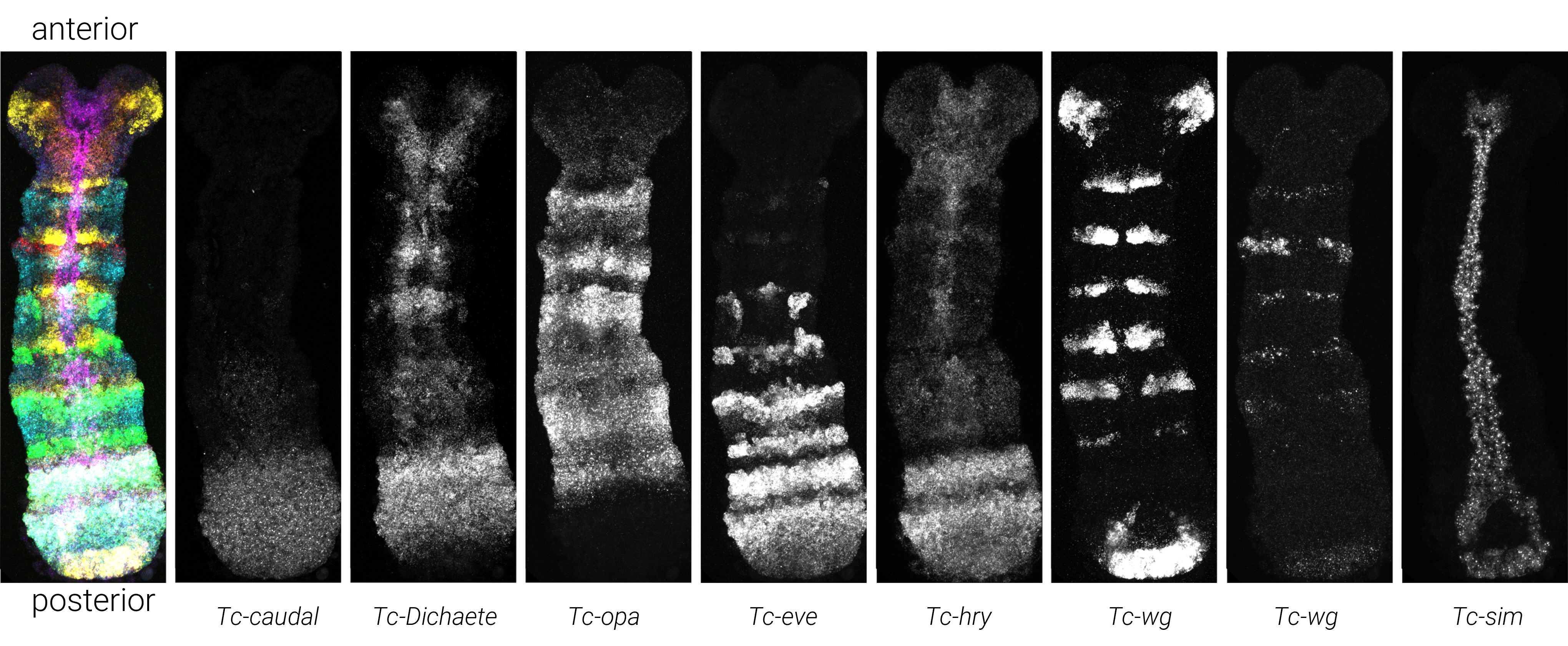
Evolution of segmentation networks across insects
The simultaneous mode of segmentation found in Drosophila is derived from an ancestral sequential mode of segmentation based around a clock-and-wavefront mechanism. We are broadly interested in the evolutionary transition from sequential to simultaneous segmentation, which has occurred several times independently within holometabolous insects. We have started to apply our multiplexed imaging methods to insect evo-devo models such as the red flour beetle Tribolium castaneum and various dipterans, to investigate patterns of conservation and divergence in segmentation gene regulation across various evolutionary scales.